

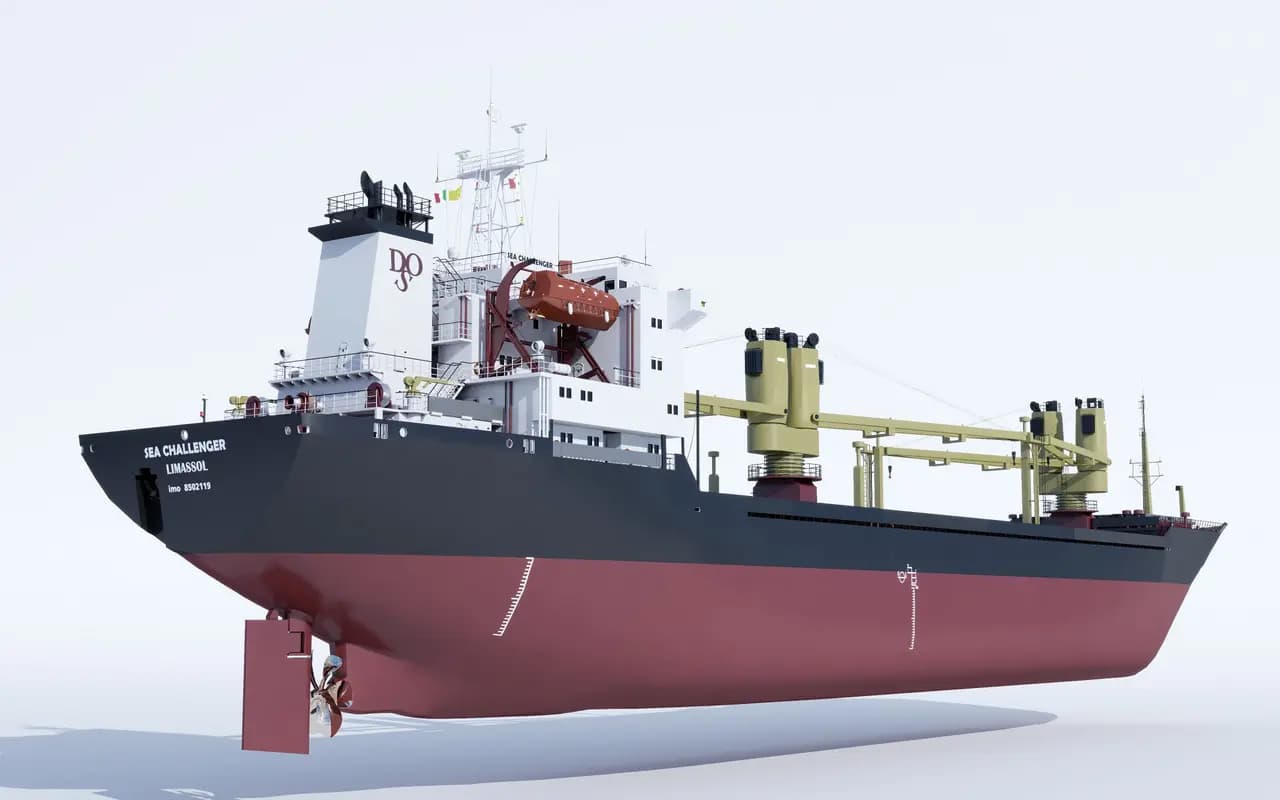
The general cargo ship is one of the most common commercial vessels on the short routes of the Persian Gulf and the Sea of Oman. If you are thinking of buying one, this guide sets out the steps, the criteria and the documents you will need.
What is a general cargo ship?
A general cargo ship is built to carry packaged goods, palletised cargo, bagged cargo and light bulk. It usually has its own cranes on deck, so it depends less on port equipment. In the Iranian market, the small and medium-sized vessels in this class work mostly on short regional routes.
Criteria for comparing vessels
- Deadweight (DWT): the total weight of cargo, fuel, water, stores and crew, in tonnes, not just the weight of the cargo. Look at Gross Tonnage (GT) alongside it. GT is a volume-based figure with no unit; it is not a weight, and it usually forms the basis for part of the port charges and for regulatory requirements.
- Age and Class: a younger vessel with valid Class usually finds insurance and port acceptance easier. A vessel without valid Class is cheaper, but you must budget for the cost of reinstating Class.
- Flag and registry: the Flag State sets the registration rules and the survey requirements for the vessel. Check that the current flag suits your trade route and your insurance. Changing flag takes time and money.
- Engine and fuel consumption: daily consumption at economical speed, the age of the main engine and the availability of spare parts.
- Holds and cranes: the number and volume of the holds, the capacity of the cranes and the condition of the Hatch Covers.
Steps to buy
- Shortlist several options from the vessels for sale listings and obtain the full specifications.
- Arrange an on-site visit and a pre-purchase inspection (Pre-purchase Survey) by a Marine Surveyor. Where possible, add an Underwater Inspection or Dry Docking.
- Check the documents: the title deed, the registration certificate, the Class Certificate and safety certificates, and the Certificate of Ownership and Encumbrance, which shows that the vessel is free of debts and mortgages.
- Agree the Memorandum of Agreement (MOA), usually on the Norwegian Saleform (NSF), with the delivery terms, the place of delivery and the payment schedule.
- Complete delivery and transfer: sign the Bill of Sale and the Protocol of Delivery and Acceptance, obtain the Deletion Certificate from the previous registry, and register the vessel in the buyer's name with the registry authority of the Flag State. For the Iranian flag, that authority is the Ports and Maritime Organization.
Second-hand cargo ship prices
Price depends on DWT, age, Class, the condition of the engine and the state of the charter market at the time. When Freight rates and Hire rise, the prices of vessels ready for work usually rise too. Our advisers can help you arrive at a fair price estimate. If you are still undecided between buying and chartering, read about the types of charter. To see what is available, search the listings on Shipo Market or list your own vessel for free, and our team will put you in touch with the other party to the deal. You can also contact Pooria Adli directly.