

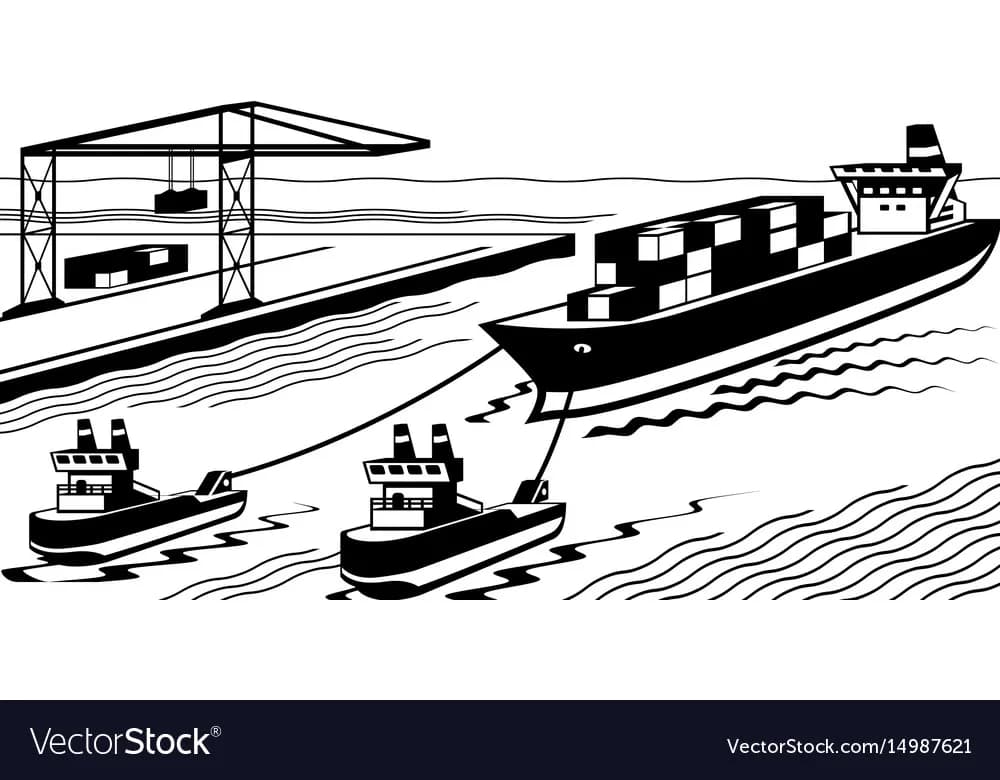
Tugs do everything from moving barges across the Persian Gulf to assisting ships alongside in port. This guide covers what to look at when you buy a used tug and what shapes its price.
What do you need the tug for?
Before you open a single listing, settle what the vessel has to do. A harbour tug is built to assist ships berthing, so it needs manoeuvrability and instant power. An ocean-going tug pulling a barge or another vessel over long routes needs the right fuel capacity, range and winch. For bulk cargo and equipment, a tug and barge often work as a pair, so match the tug you buy to the type of barge and the route it will work.
The three main price factors
- Engine power (BHP or kW). This is the combined output of the main engines. It is not the same as pulling force and cannot stand in for it.
- Bollard Pull. This is the vessel's pulling force, measured in tonnes of force, and it should be proved by a documented test. Two tugs with the same engine power can have different Bollard Pull, so ask for the test certificate, not just the figure in the brochure.
- Year built and engine running hours. An overhauled engine with documentation usually helps the vessel hold its value. An engine with high running hours and no repair history usually carries a hidden cost.
Tug inspection checklist
- Hull and underwater inspection: the last dry docking, plate thickness gauging, and the condition of the propeller, Kort nozzle and shaft.
- Engine room: engine and gearbox model, whether spare parts are available in Iran, oil and coolant leaks, and the generators.
- Towing equipment: winch, tow hook, wire rope and towline, and towing pin.
- Documents: proof of ownership, a Certificate of Ownership and Encumbrance, confirmation that there is no ship arrest, the Class Certificate if one exists, safety and radio certificates, and insurance history.
For the full checklist, read pre-purchase inspection of a used vessel.
Used tug prices in the Iranian market
A tug's price depends on its power, Bollard Pull, age, class status and delivery location, and the market centres mostly on the ports of southern Iran. To compare fairly, put the technical particulars of several tugs side by side: documented Bollard Pull, year built, class status and engine history.
Browse the tugs available for sale now, or if you own a tug, list your vessel for sale. If you want an expert opinion to choose between several options, vessel purchase consulting is there for you, and you are welcome to contact me, Pooria Adli, at Shipo Market.