

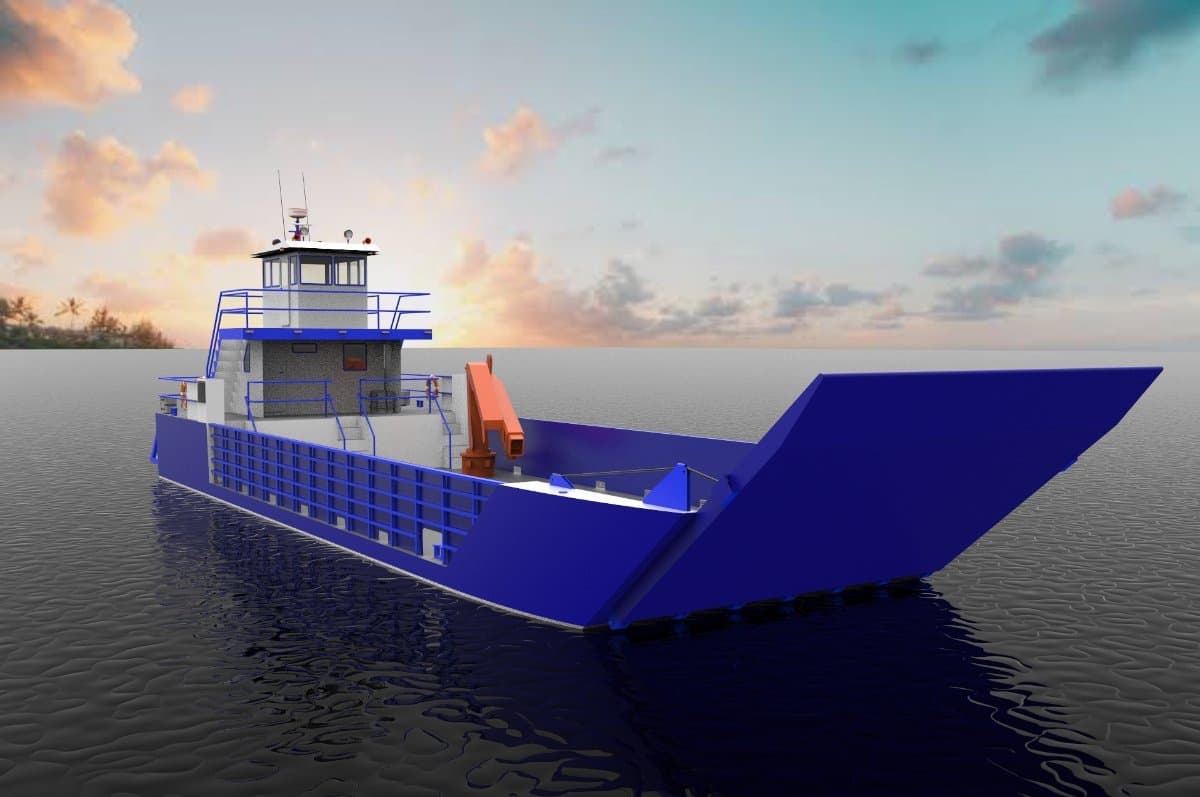
A landing craft is a vessel with a bow ramp that puts cargo and vehicles ashore without needing a quay. That is why it is a common choice for the Persian Gulf islands, coastal projects and machinery transport. Here I cover its uses, the technical criteria that matter and the difference between buying and chartering.
What is a landing craft used for?
The bow ramp lets trucks, loaders, containers and building materials be loaded and unloaded directly from a beach or a simple jetty. In Iran, these vessels work on island supply runs, coastal construction projects and in the oil and gas industry. Landing craft listings on Shipo Market come in a range of capacities.
What to check when choosing
- Deadweight (DWT) and permitted deck load. For heavy machinery, deck strength matters more than total deadweight.
- Ramp length, width and angle. These decide which vehicles can disembark and on what slope.
- Shallow draft forward. A landing craft must be able to run up close to the beach, so ask for the draft at full load.
- Engines. Many of these vessels have twin engines and twin propellers for manoeuvring in shallow water. Ask for running hours and repair history.
- Crew accommodation and permits. If the vessel will also carry project staff, check the accommodation and the permits required to carry passengers or personnel.
Buy or charter?
For continuous supply to an island or a project that runs for several years, buying a second-hand landing craft is usually the better value. For a short project, chartering a landing craft on a Time Charter or a Voyage Charter removes the capital cost. We explain the difference between the two in charter types.
Browse landing craft listings on Shipo Market, or list your own vessel for sale or charter. If you would like help choosing, contact me, Pooria Adli, and I will gladly talk it through with you.