
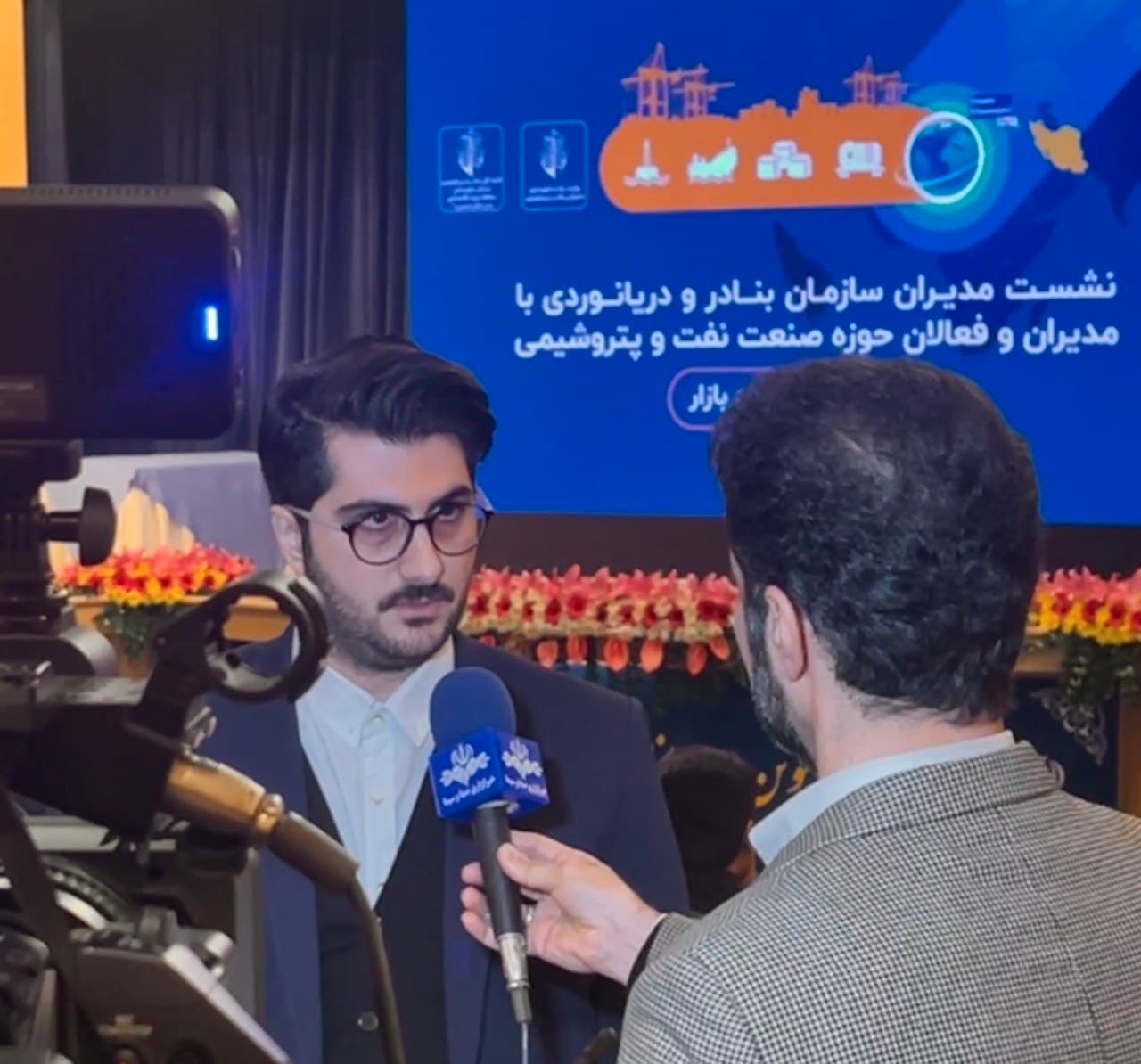
In this interview, Dr Mehrshad Kouhestani presents a sea-based economy as a way to reduce the country's reliance on oil, and says this capacity should sit at the top of development strategy. Drawing on global maritime trade figures, he explains why any disruption at ports and shipping lines feeds straight into the price and availability of goods.
Published in Marine News, 21 Esfand 1401 (Iranian calendar). Interview with Dr Mehrshad Kouhestani.
Key points
- More than 90 percent of global trade by volume moves by sea.
- According to him, global maritime trade is about 12 billion tonnes a year, and about 200 million TEU of cargo moves in containers.
- The Blue Economy means the sustainable use of seas, coasts and islands for economic growth and employment.
- Disruption at ports means shortages of food, energy and medicine, and higher prices for producers and consumers.
The Shipo Market founder's view
Dr Kouhestani's main message is that large-scale investment in maritime transport is essential for the country's development, and that the link between industry and the sea must be taken seriously. The maritime economy is tied into the global economy, and its effects cannot be ignored.
“Maritime transport can be regarded as the lifeline of the global economy.” (Dr Mehrshad Kouhestani)
Source
Read the full text on Marine News
This page is a summary of a report published by the media outlet; the full text belongs to the publisher.
If you are looking at vessels in Iran, search Shipo Market, list your vessel for free, or contact Pooria Adli directly. I am happy to talk through your plans.