

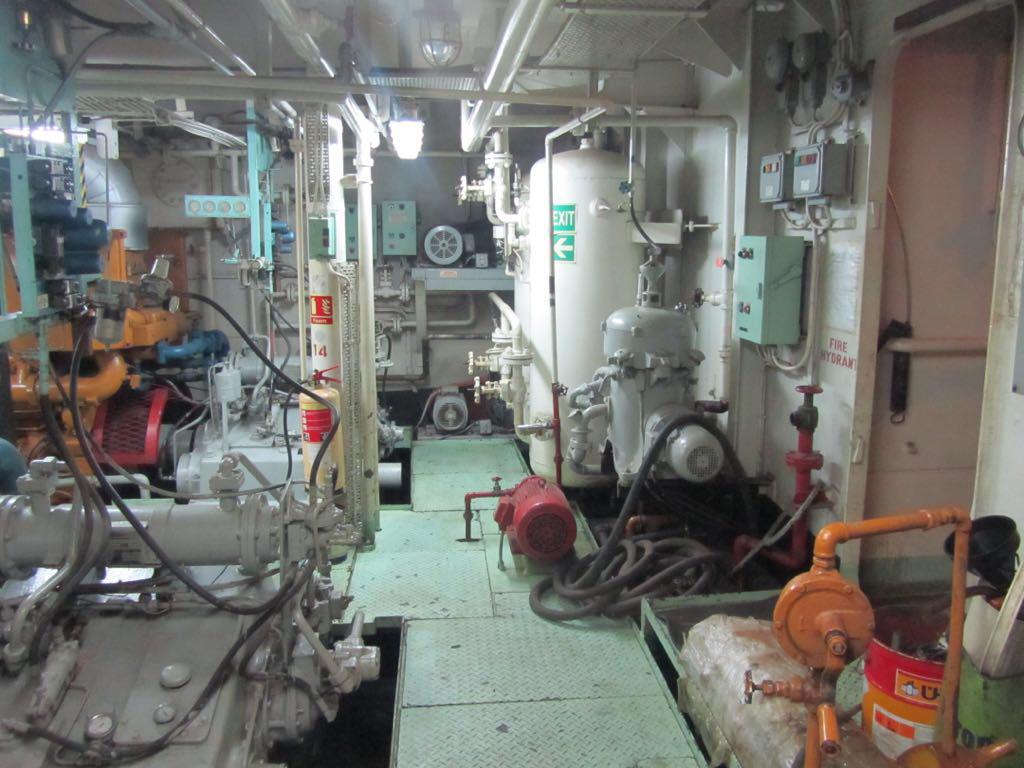
A vessel offered today below comparable listings may have no buyer tomorrow when you come to resell or charter it. The usual reason is a thirsty engine and a file that does not document emissions and actual fuel consumption.
In ship sale and purchase (S&P) deals, most buyers look first at price, year of build and hull condition, while the engine and fuel consumption shrink to a single line in the listing specification. This is a commercial mistake. Global pressure to cut marine emissions can affect a vessel's resale value and how easy it is to charter. A vessel with high fuel consumption with no paperwork may find a buyer today, but in the next sale it will probably have to be sold at a heavier discount.
Why emissions reach the resale price
The scale of the issue. According to published estimates, shipping accounts for about 4 per cent of CO2 emissions, 10 to 15 per cent of NOx and 5 to 9 per cent of SOx. With a share like that, regulators, charterers and buyers weigh documented consumption and emissions more seriously than before.
The pace of regulation. Because ships cross borders, international rules are essential, but they usually change more slowly than national laws. That slowness is no reason for complacency. The direction of travel is clear, and a vessel you want to sell some years from now will be judged by the standards of that day, not the day you bought it. The MARPOL Convention is the main framework for preventing pollution from ships, and a buyer should know what evidence the vessel holds against its requirements.
The effect in the market. In categories with many listings, buyers have comparable vessels to measure against. In such a market, a vessel with an incomplete engine and consumption file is usually passed over sooner, or finds a buyer only at a serious discount.
Documents to request from the seller before signing
Engine and emissions certificates. Ask for the certificates for the main engine and generators, and the emissions documents issued or approved by the class society or the Flag State, together with the Class Certificate. Do not accept “it will be sorted out later” for any of them. Documents that are not available before the contract are usually much harder to obtain after delivery.
Real fuel consumption records. Ask for consumption reports across different operating periods, bunkering records and engine room reports. A figure the seller quotes verbally is not evidence. Look at consumption under defined conditions: speed, load and sea state. If the vessel has run for years without regular records, that in itself is a serious warning.
Repair and survey records. Put the Class Records Inspection reports, the Special Survey history and the date of the last dry docking side by side. If the engine has recently been overhauled, get the invoice and the technical report. An undocumented repair usually carries little weight in a buyer's assessment.
Additional technical information. Ask the seller whether any changes have been made to the propulsion system, fuel system or electrical equipment, and with what approval. Any modification made without class approval can cause problems both at survey and at the next sale.
Survey and sea trial: see the numbers yourself
The survey before purchase (Pre-purchase or Condition Survey) should be carried out by an independent Marine Surveyor you trust, not the seller's representative. The scope of work should give the engine and fuel system a separate line: the condition of the main engine and generators, leaks, smoke, uneven performance, and whether the nameplates match the certificates.
The Sea Trial is your chance to record consumption at the agreed load and speed and compare it with the seller's records. If trial consumption differs widely from the records supplied, then usually either the records are inaccurate, or the engine has lost performance, or the trial conditions were not the same as those under which the records were made. All three affect pricing. Write the trial conditions, including load, speed and duration, into the Memorandum of Agreement (MOA) before signing.
Turn the results of these checks into contract Subjects: delivery of the engine and emissions documents, satisfaction with the survey, and a successful sea trial. Until these subjects are lifted, the deal is not final, even if a Firm Offer has been made or accepted.
Buy the potential for future upgrades too
The price of a secondhand vessel reflects not only its condition today but also the scope to improve it in the years ahead. Energy storage technologies such as batteries and supercapacitors are advancing. Some battery generations are still at an early stage of development, and supercapacitors charge almost instantly but store less, so they are probably better suited to short, intense power demands. The diesel generator also continues to improve, at a slower rate. So the diesel generator will not be abandoned in the near future, but energy management across the whole vessel becomes more important.
Energy management means looking at the whole chain: sourcing, conversion, storage and transmission. The application of each vessel determines which system suits it best. A tug with a variable workload does not have the same needs as a crew boat. Ask the shipowner or the surveyor how flexible the engine room space, switchboard capacity and auxiliary systems are for a later change. A vessel that can be upgraded usually has the upper hand in the future market, even if she costs the same today as an inflexible one.
What charterers and sellers should do
Charterer and owner. Under a Time Charter, fuel cost usually falls on the charterer, so high consumption directly affects the charterer's costs. An owner with documented consumption and complete certificates finds it easier to offer the vessel on the charter market and is in a better position in negotiation. Any claim about speed and consumption in the Charter Party must be defensible with records.
Seller. If you plan to sell, complete the engine and consumption file before you place the listing: certificates, fuel records, repair reports and the latest class reports. Your price is easier to defend against comparable listings when the buyer can verify your figures. Transparency does not usually lower the price. It shortens the negotiation and cuts the rounds of Counter Offers.
Three questions before signing
What is this vessel's real consumption, and where is the proof? Are the engine and emissions certificates complete? Who will buy this vessel in the next sale? If the answer to any of them is unclear, a low price does not compensate for the risk.
On Shipo Market you can compare sale and charter listings by vessel type and specification. No user's phone number is published on the site, and buyer and seller are connected through Shipo Market specialists. If you are an owner, listing is free, and a well documented file can give you an edge over comparable listings. To review a specific vessel or draw up a checklist of documents before a deal, you can contact me directly.